Daniel Tomlinson
HM Treasury · GBR
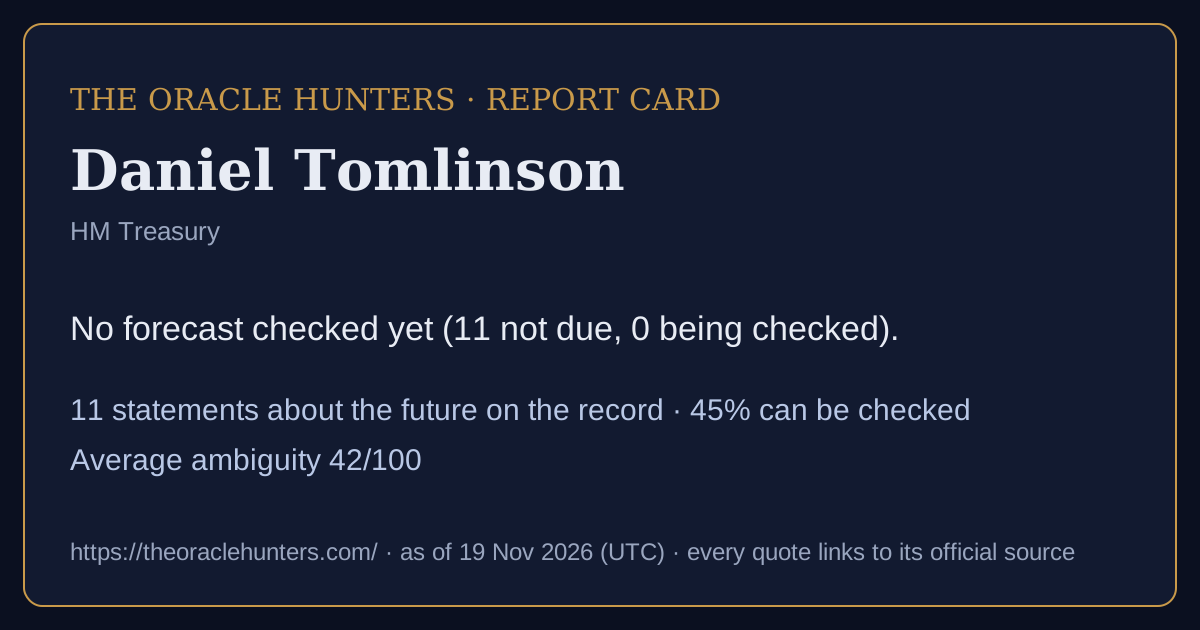
Track record: No forecast checked yet (11 not due, 0 being checked).
11forecasts & commitments on the record
45%can be checked as stated
42average ambiguity (0-100)
0goalpost moves recorded
0confirmed U-turns
Timeline
came true partly did not not due / being checked / too vague
Calibration score: shown after 10 checked forecasts with a stated likelihood (now 0).
How they speak about the future: based on data 7, stated on authority 4.
Kinds of claim: forecast 6, mixed claim 3, commitment 2. · Download this report card as a picture
In the nine words
πρόγνωσιςInference from evidence7 · 64%προαναγγελίαPublic pre-announcement2 · 18%μαντείαInspired knowledge2 · 18%
How to read this
Each box is one sentence a public figure or institution said about the future, word for word, with a link to the official text. Can be checked means it names what will happen, by when, and how likely - so it can be compared with official figures later. Too vague to check means it does not. Ambiguity (0-100) is how many different ways the sentence can be read. When the date passes, the forecast is compared with official data and marked came true, partly or did not come true. Labels judge the sentence, never the person. Full guide and glossary.On the record (11)
Firstly, our large urban areas are doing less well than their international counterparts – but if we raised the productivity of the five largest Mayoral Strategic Authorities outside of London to the national average, we could add around £53 billion to the UK’s economic output.
And by working together, I know that we will deliver the good growth that our country needs.
Alongside this, we will support local councils to improve their financial stability, to back the high streets, regeneration and local transport that are the foundations of growth.
We will deliver our plan through the Parliament, including in the Budget, in the Rewiring the State White Paper, and at next year’s Spending Review.
And later this year, we will publish the Rewiring the State delivery plan to devolve more powers on skills, housing, transport and innovation, so that places can integrate services into something greater than the sum of their parts.
HMRC’s funding will increase from around £6 billion today to around £7 billion by the end of the decade, enabling the most ambitious ever package of measures to close the tax gap.
Just over 6 months from now, in April 2026, sole traders and landlords with income over £50,000 will be required to use Making Tax Digital for their Income Tax obligations.
All of this means that, by 2030, HMRC will be an agile department, with modern IT infrastructure, robust data capabilities, and more innovative technology including AI - with the right guardrails and oversight in place.
And from April 2026, tax advisers who interact with HMRC on behalf of their clients will be required to register with HMRC – a first step to raising standards in the tax advice market.
HMRC will recruit and train an additional 5,500 new compliance caseworkers and 2,400 debt management staff by 2029 to 2030, with more than 700 additional caseworkers and 1,200 debt management staff on board already.
By 2029-30, HMRC will bring in £7.5 billion more tax revenue, making compliance easy for those who are trying to get their tax right and tackling some of the toughest areas of compliance risk.
Also said - not checkable as stated (1 newest)
Remarks about the future with no date, figure or likelihood that could be checked. They are kept on the record and shown here, but not scored.
We will transfer real fiscal firepower out of the Treasury, more on this at the Budget.